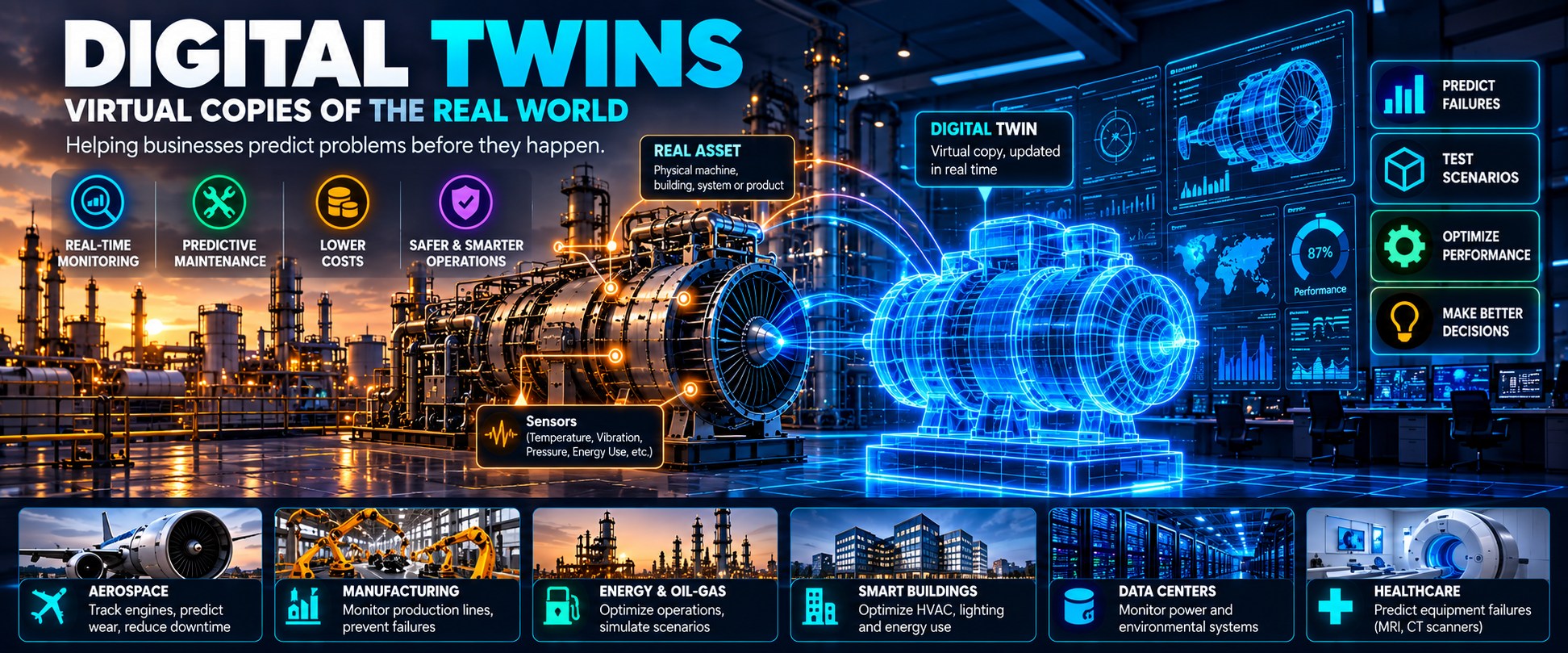
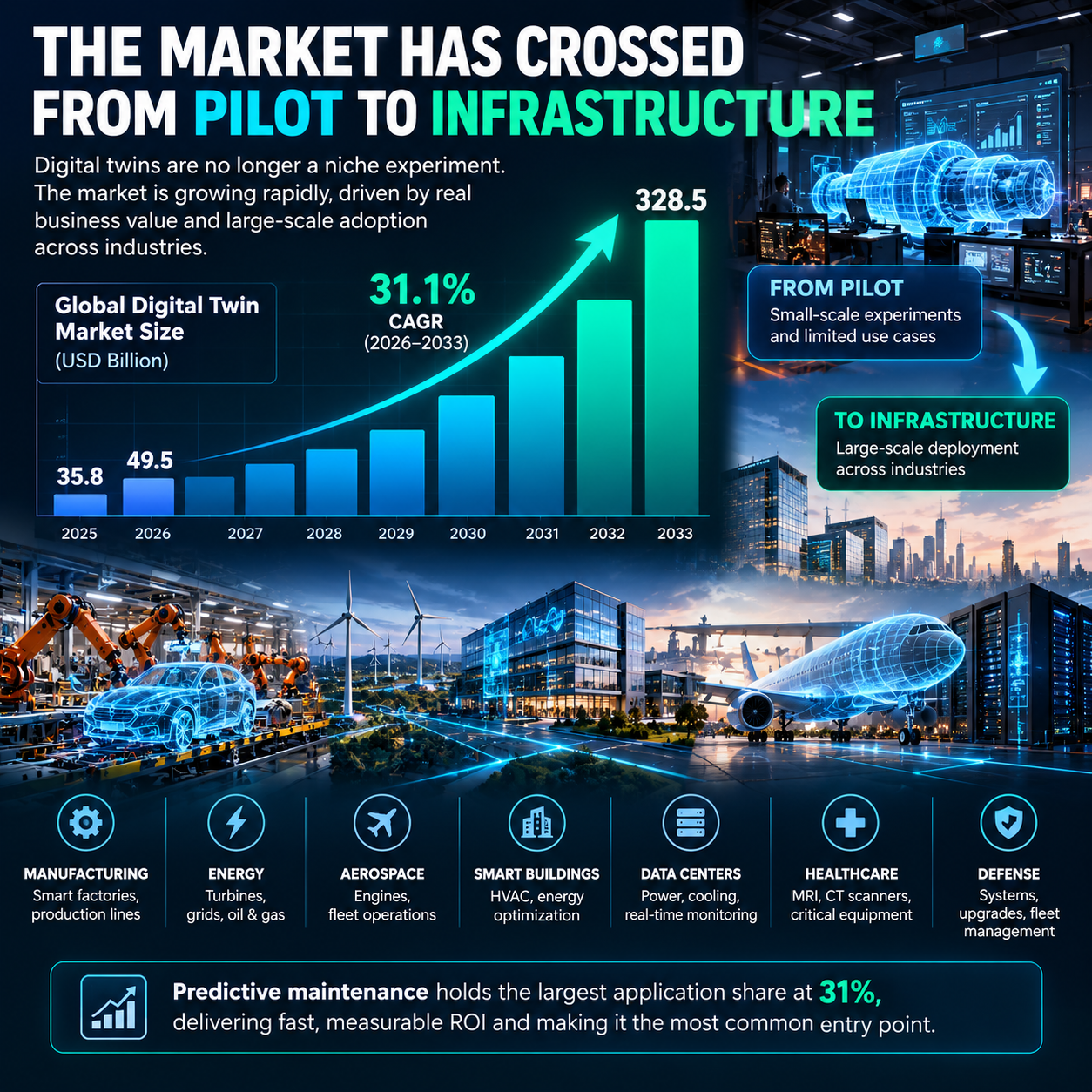
Energy and aerospace. Siemens Energy implemented digital twins across its gas turbine operations and reports a 20% reduction in maintenance costs and a 15% improvement in operational efficiency through predictive analytics. Rolls-Royce uses digital twins to track engines during flight, predict wear patterns, recommend maintenance actions, and reduce unnecessary shop visits. Chevron uses them to simulate scenarios and optimize its oil and gas field operations.
Manufacturing. Smart factories use sensor-rich environments to create real-time twins of entire production lines, supporting logistics forecasting, robot path planning, defect inspection, and preventive maintenance. Siemens and NVIDIA, for instance, have partnered on real-time twins of production lines. In food manufacturing, Mars piloted a predictive maintenance program for chocolate production across multiple plants using a digital twin solution running on Microsoft’s Azure IoT Edge platform. BMW’s iFACTORY is also cited as a strong manufacturing example.
Data centers and healthcare equipment. Microsoft deploys digital twin technology across its data centers to monitor critical environmental and power systems in real time, and GE HealthCare applies it to critical imaging equipment such as MRI and CT scanners through its OnWatch Predict solution.
Smart buildings and energy. Twins of commercial buildings integrate data from HVAC, lighting, occupancy, and weather forecasts to continuously tune controls, and UK Green Building Council case studies show AI-enabled optimization delivering electrical energy savings of about 30% and thermal savings of over 40%. Utilities also build twins of transmission and distribution networks to get a live view of grid conditions, power flows, and stress points.
Defense. The F-35 program uses digital twins to manage system upgrades and cut sustainment costs across the fleet.