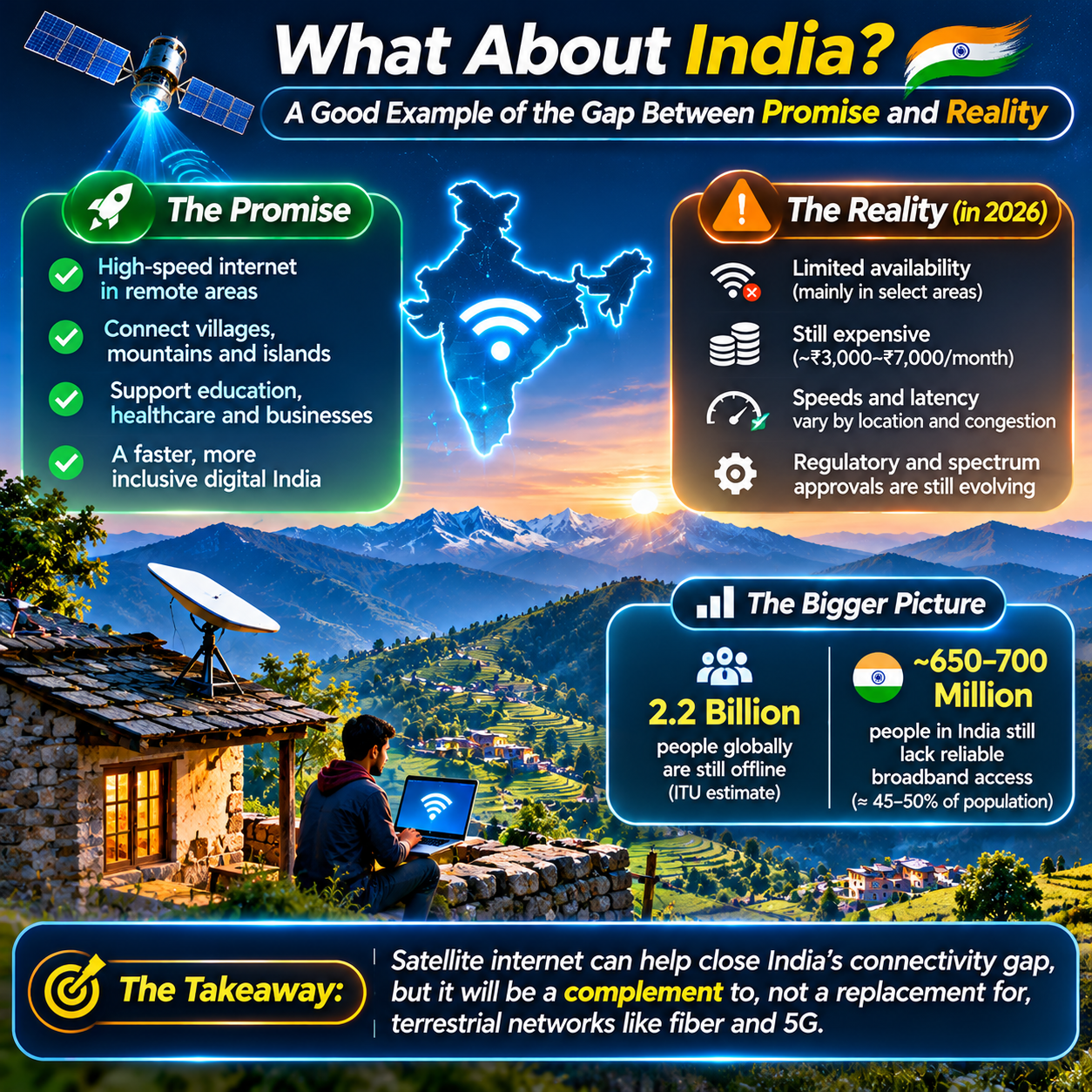
Terrestrial networks are brilliant where people are packed together and uneconomic where they are not. Laying fibre across forests, mountains and thinly populated land costs a great deal for very few customers, and mobile towers need power, roads and maintenance crews. The result is a persistent gap. One 2026 statistics roundup cites an ITU estimate of 2.2 billion people who remain offline. The figure is an estimate, and not everyone offline lacks coverage; cost, devices and skills matter too. But geography is a large part of the story.
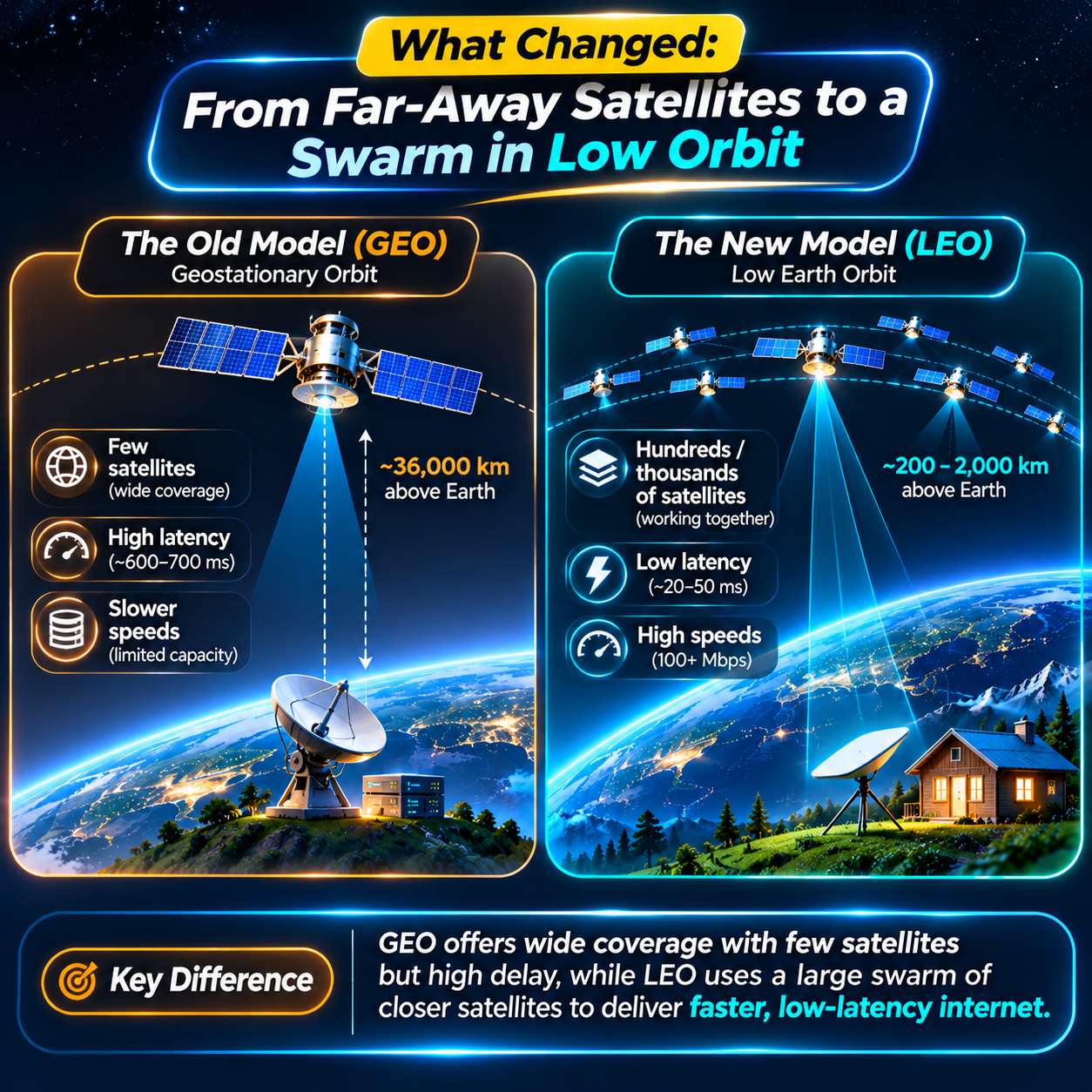
Older satellite internet existed, but it had a bad reputation: slow, laggy and expensive. To understand what changed, you need to understand orbits.