For the first seventy years of computer science, machines were essentially passive calculators and rigid rule-followers. You gave a software program a precise set of instructions—an algorithm—and it executed those instructions with flawless mathematical precision. When artificial intelligence took its first commercial leaps in the 2010s, it was largely analytical: systems could tell you if a credit card transaction was fraudulent, recommend a song you might like, or tag your friend in a photograph.
Yet, as impressive as those capabilities were, computers remained fundamentally incapable of the one trait humanity considered uniquely its own: original creation. A computer could calculate the trajectory of a rocket to Mars, but it could not write an original sonnet about the journey, compose an emotive orchestral score, or paint an ethereal Martian landscape from scratch.
That historical barrier has now permanently collapsed.
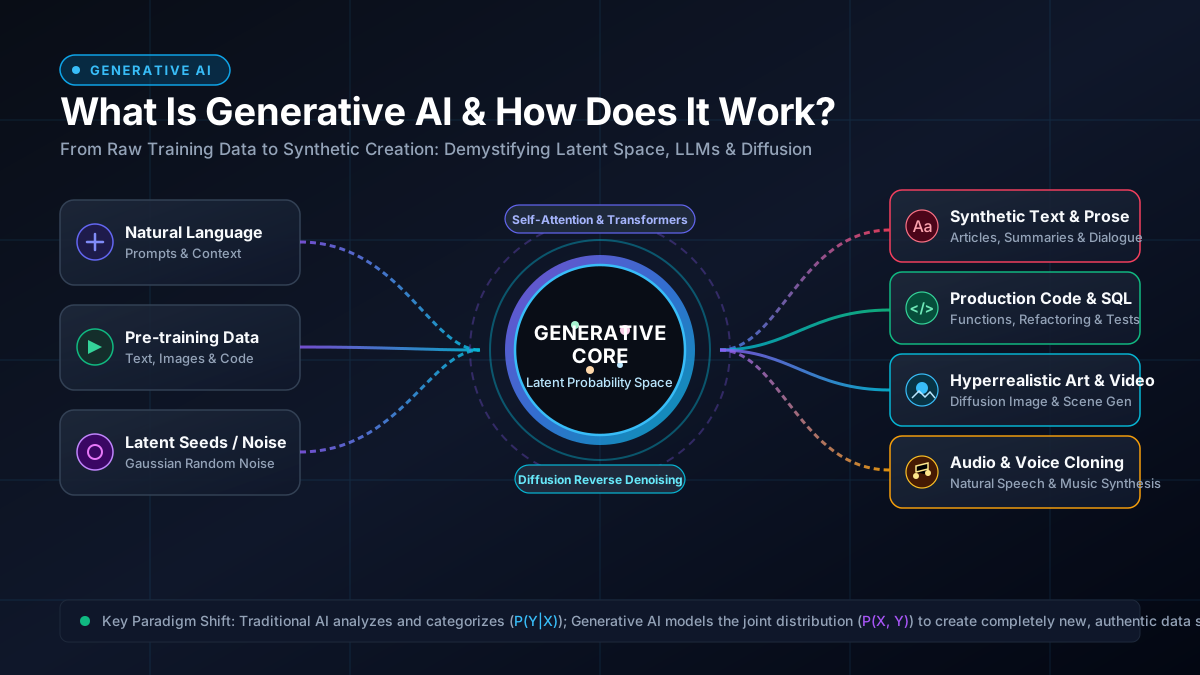
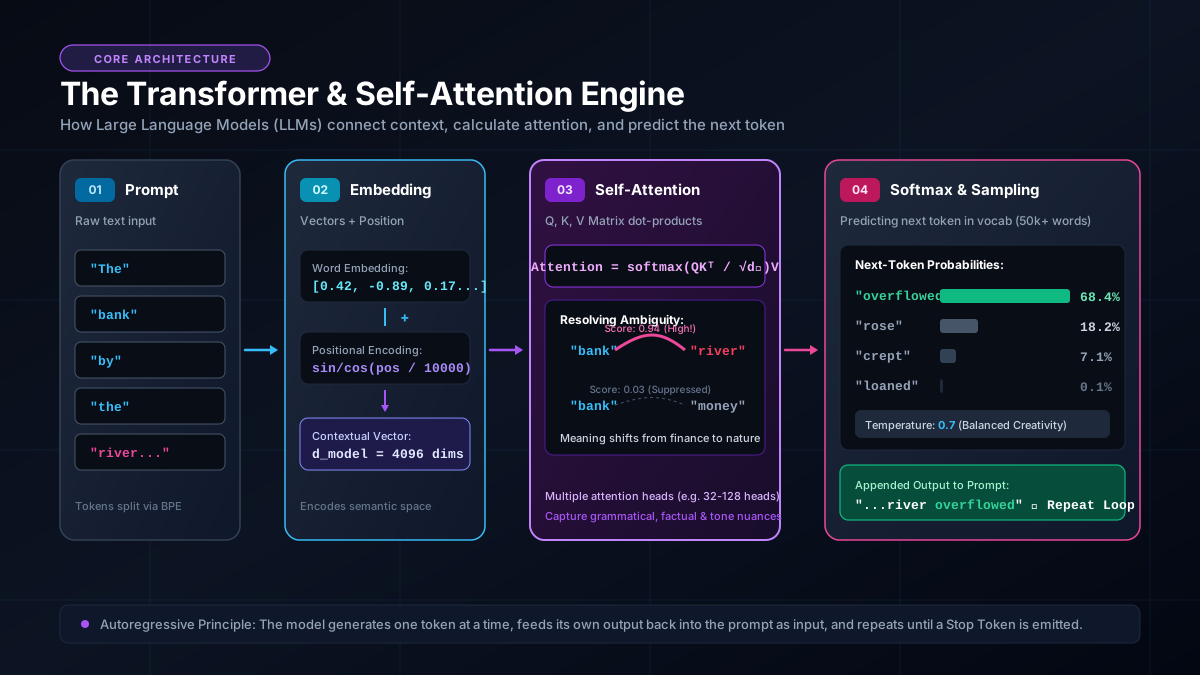
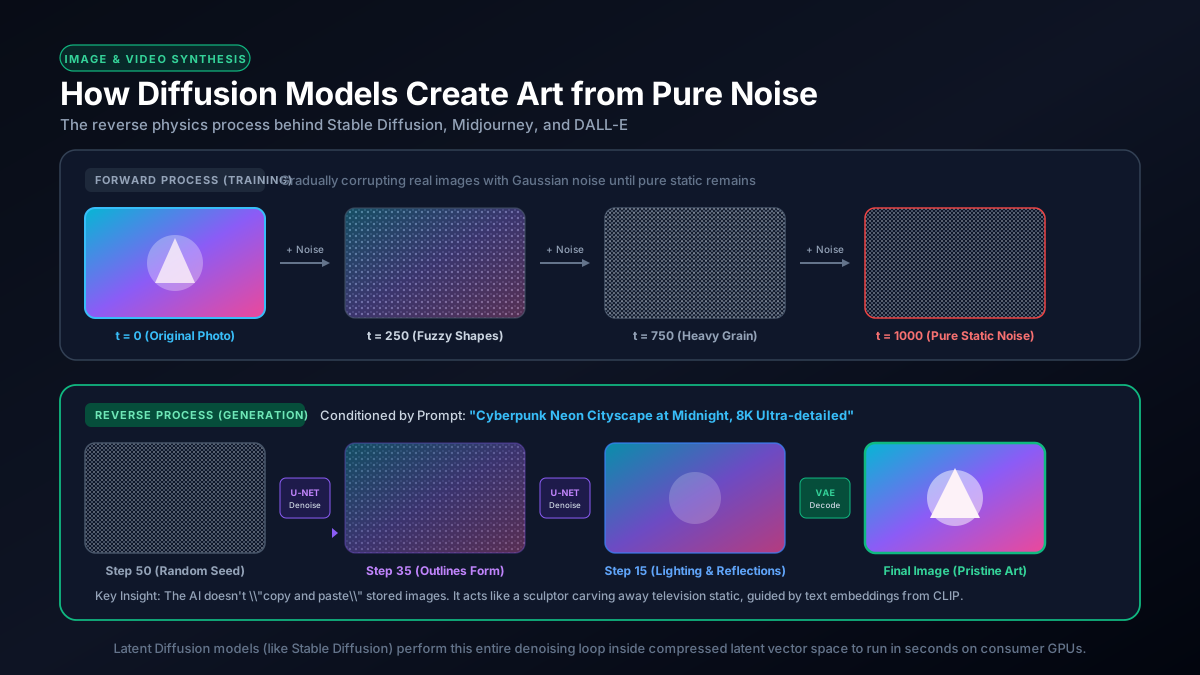
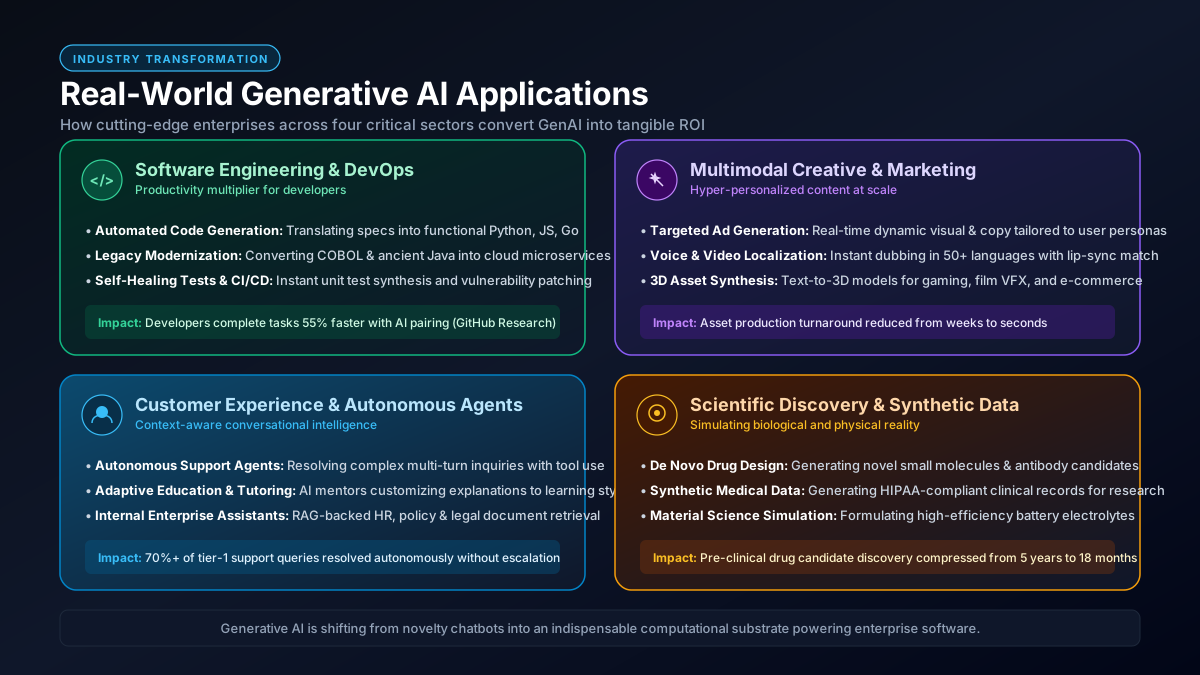
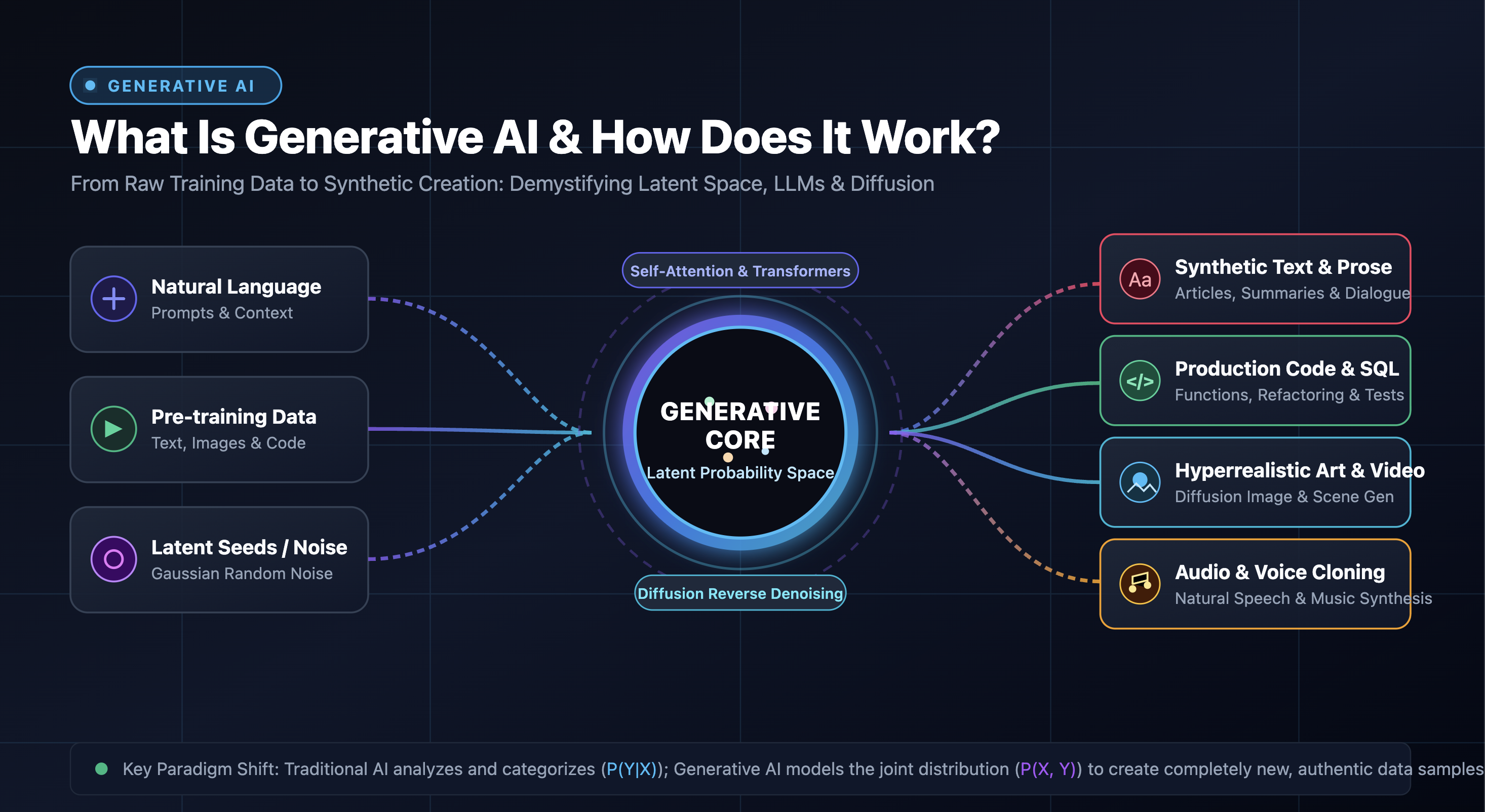
We have entered the era of Generative Artificial Intelligence—widely known as Generative AI or GenAI. Today, neural networks can draft comprehensive legal contracts, synthesize photorealistic cinematic videos from a single sentence, generate production-ready software architectures, and converse with human-level nuance across hundreds of languages.
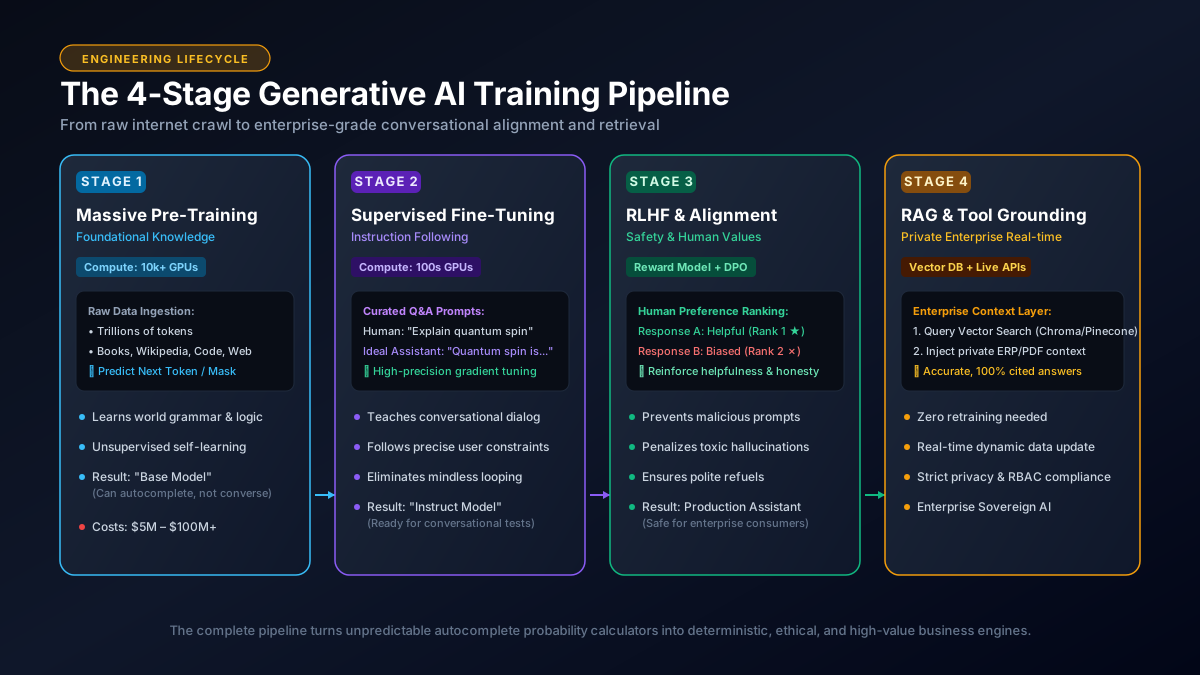
To understand this technological revolution is not just an academic exercise; it is the essential literacy of the modern digital age. In this comprehensive guide, we will unpack what Generative AI truly is, demystify the mathematical engines that power it, and explore how it is reshaping the architecture of human work.