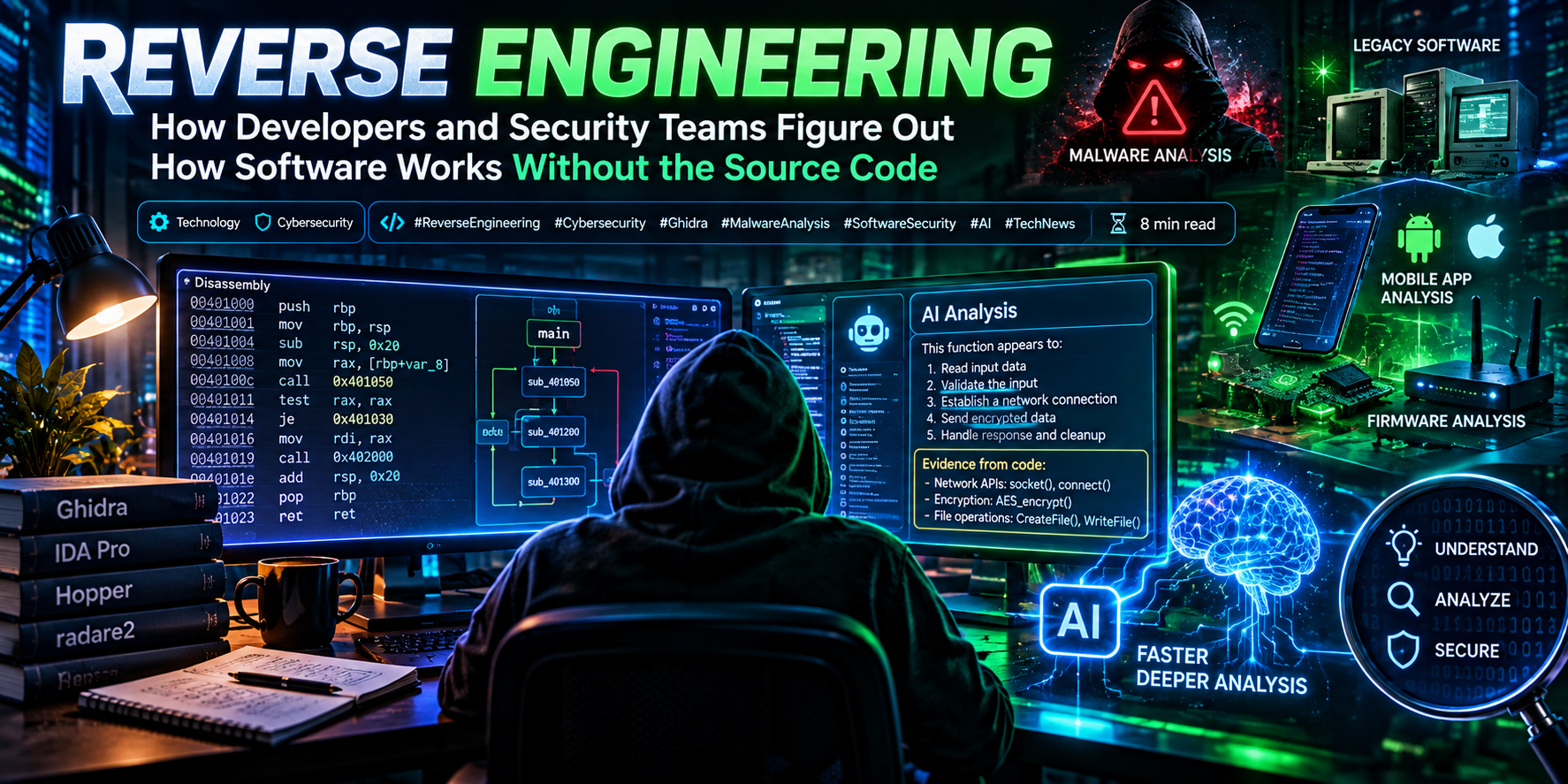
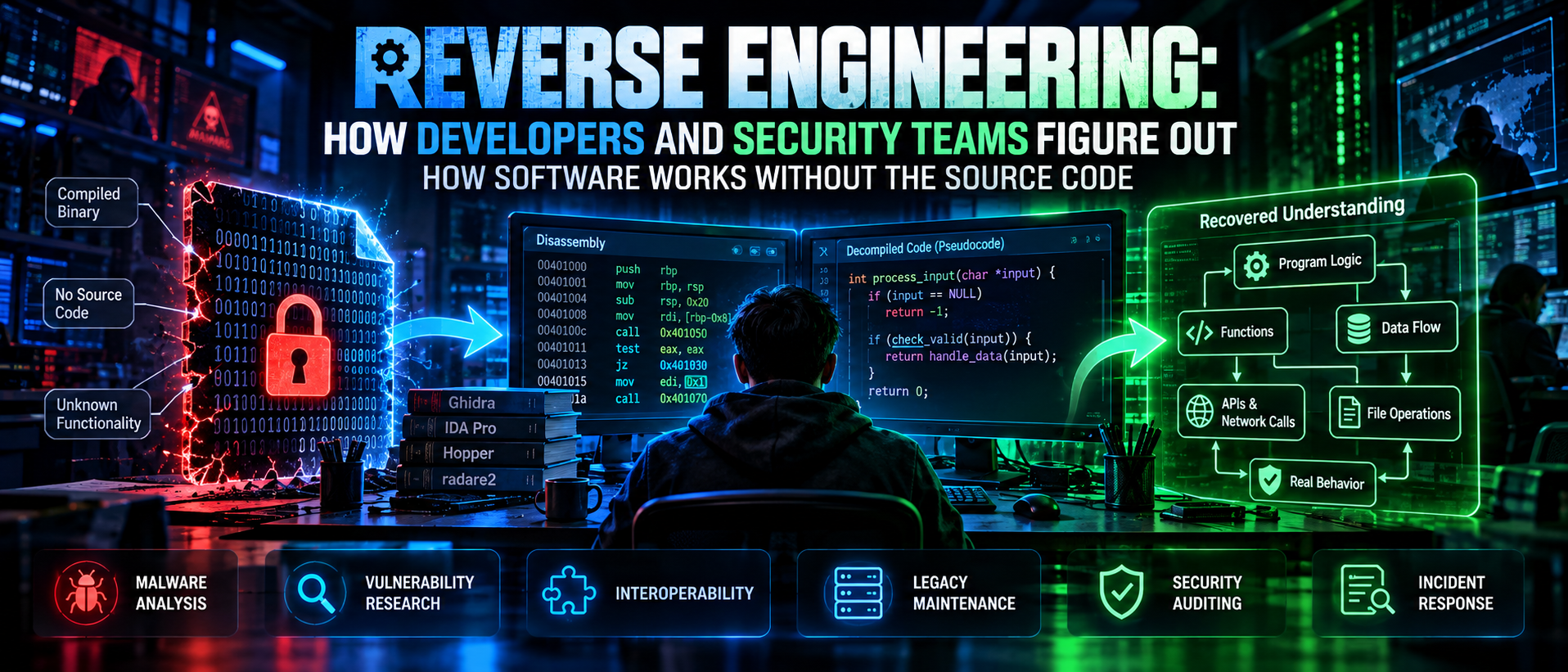
Most software is shipped as compiled binaries, not readable source code. That’s fine until something goes wrong. A company’s critical system runs on a program written 15 years ago by a vendor that no longer exists. A security team receives a file that might be malware. Two products need to work together but one has no documentation. In each case, the people responsible need to know what the software actually does, and the source code isn’t available.
Reverse engineering closes that gap. It’s the process of taking a finished product apart to understand its design, behavior, and logic, working backward from the result instead of forward from a spec.
So what exactly is reverse engineering?
At its core, it’s analysis in reverse. A normal development flow goes from idea, to design, to code, to a finished product. Reverse engineering starts at the finished product and rebuilds an understanding of the design behind it.
It shows up in several forms: